
Full moon 2027: every date and time in Sweden
Updated
Short answer: in 2027 there are twelve full moons, on 22 January, 21 February, 22 March, 21 April, 20 May, 19 June, 18 July, 17 August, 16 September, 15 October, 14 November and 13 December. The last full moon of 2026 falls on Christmas Eve, 24 December at 02:28. Below are the times in Swedish time, every new moon and half moon, the biggest full moon of the year, the lunar eclipses and the same tables for 2028.
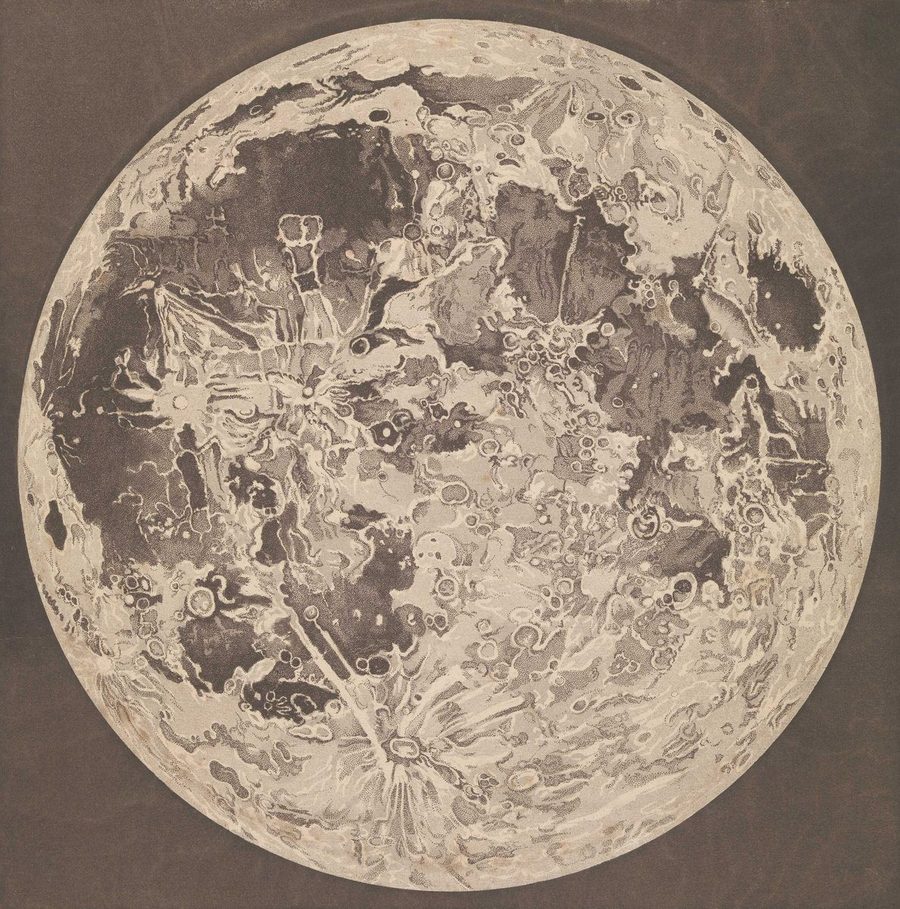
Full moon 2027
The time is the moment the Moon stands exactly opposite the Sun. The Moon looks full both the night before and the night after, so if you want to see the full moon, the night closest to the time is the one.
| Date | Day | Time | Distance from the Earth |
|---|---|---|---|
| 22 January | Friday | 13:17 | 357,600 km |
| 21 February | Sunday | 00:23 | 363,300 km |
| 22 March | Monday | 11:44 | 372,500 km |
| 21 April | Wednesday | 00:27 | 383,400 km |
| 20 May | Thursday | 12:59 | 393,900 km |
| 19 June | Saturday | 02:44 | 401,900 km |
| 18 July | Sunday | 17:45 | 406,000 km |
| 17 August | Tuesday | 09:28 | 405,100 km |
| 16 September | Thursday | 01:03 | 399,300 km |
| 15 October | Friday | 15:47 | 389,900 km |
| 14 November | Sunday | 04:26 | 378,800 km |
| 13 December | Monday | 17:09 | 368,100 km |
New moon and half moon 2027
From new moon to new moon takes 29.5 days on average. About a week after the new moon comes the first quarter, when the Moon is a waxing half moon and its right half is lit. A week after the full moon comes the last quarter, a waning half moon with its left half lit.
| New moon | First quarter | Full moon | Last quarter |
|---|---|---|---|
| 7 January 21:24 | 15 January 21:34 | 22 January 13:17 | 29 January 11:55 |
| 6 February 16:56 | 14 February 08:58 | 21 February 00:23 | 28 February 06:16 |
| 8 March 10:29 | 15 March 17:25 | 22 March 11:44 | 30 March 02:54 |
| 7 April 01:51 | 14 April 00:56 | 21 April 00:27 | 28 April 22:18 |
| 6 May 12:58 | 13 May 06:44 | 20 May 12:59 | 28 May 15:58 |
| 4 June 21:40 | 11 June 12:56 | 19 June 02:44 | 27 June 06:54 |
| 4 July 05:02 | 10 July 20:39 | 18 July 17:45 | 26 July 18:55 |
| 2 August 12:05 | 9 August 06:54 | 17 August 09:28 | 25 August 04:27 |
| 31 August 19:41 | 7 September 20:31 | 16 September 01:03 | 23 September 12:20 |
| 30 September 04:36 | 7 October 13:47 | 15 October 15:47 | 22 October 19:29 |
| 29 October 15:36 | 6 November 09:00 | 14 November 04:26 | 21 November 01:48 |
| 28 November 04:24 | 6 December 06:22 | 13 December 17:09 | 20 December 10:11 |
| 27 December 21:12 | - | - | - |
The biggest full moon of the year
The Moon's orbit around the Earth is not a circle, so its distance changes all the time. In 2027 the full moon is closest to the Earth on 22 January, 357,600 km away, and farthest on 18 July, 406,000 km away. The January moon then looks a little more than 13 per cent larger than the July moon. A full moon like that is often called a supermoon, but the word is not a scientific term and there is no set limit for how close the Moon must be. The Christmas Eve full moon of 2026 is closer still, 356,700 km away.
High in winter, low in summer
The full moon always stands opposite the Sun. When the Sun is low in winter, the full moon therefore stands high in the night sky, and in summer it is the other way round. This is how high above the horizon each full moon of 2027 reaches, as we computed it for a free horizon:
| Full moon | Malmö | Stockholm | Umeå | Kiruna |
|---|---|---|---|---|
| 22 January | 54° | 49° | 45° | 41° |
| 21 February | 43° | 40° | 35° | 31° |
| 22 March | 33° | 29° | 25° | 21° |
| 21 April | 17° | 14° | 9° | 5° |
| 20 May | 10° | 6° | 2° | below the horizon |
| 19 June | 7° | 3° | below the horizon | below the horizon |
| 18 July | 12° | 9° | 4° | at the horizon |
| 17 August | 20° | 16° | 11° | 7° |
| 16 September | 34° | 30° | 26° | 22° |
| 15 October | 49° | 45° | 40° | 36° |
| 14 November | 56° | 52° | 48° | 43° |
| 13 December | 60° | 57° | 52° | 48° |
So the full moon of June 2027 reaches only 3 degrees above the horizon in Stockholm, and in Umeå and Kiruna it does not rise at all that night. If you want to see a big, high full moon, December and January are best.
Lunar eclipses 2027 and 2028
A lunar eclipse can only happen at full moon, when the Earth comes between the Sun and the Moon and the Earth's shadow falls on the Moon. When the Moon is completely inside the shadow it turns dark red, and it is then often called a blood moon.
- 21 February 2027, around midnight (greatest at 00:12): an eclipse in the Earth's penumbra. The Moon stands high all over Sweden, but it only dims a little, so it is hard to see any difference.
- 18 July and 17 August 2027: penumbral eclipses while the Moon is below the horizon in Sweden. They cannot be seen here.
- 12 January 2028, early in the morning (04:43-05:42): a small partial eclipse, where the Earth's shadow takes a thin slice of the Moon. It can be seen all over Sweden if the sky is clear.
- 6 July 2028: a partial eclipse while the Moon is below the horizon in Sweden.
- 31 December 2028, New Year's Eve: a total lunar eclipse. The Moon is completely inside the Earth's shadow from about 17:15 to 18:30 and stands low in the east, 10-25 degrees above the horizon all over the country. It is the first total lunar eclipse since March 2026.
Two full moons in December 2028
When there are two full moons in the same calendar month, the second is often called a blue moon. 2027 has no such month. In December 2028 there is a full moon on both the 2nd and the 31st, so the New Year's Eve full moon of 2028 is both a blue moon and a blood moon.
Why the Moon has phases
The Moon gives no light of its own. What we see is the sunlight that falls on it, and as the Moon goes round the Earth we see more or less of its lit side. At new moon the Moon stands between the Earth and the Sun and turns its dark side towards us. At full moon it is on the other side of the Earth and the whole lit side can be seen.
One orbit of the Earth takes 27.3 days, but from new moon to new moon takes 29.5 days, because the Earth has meanwhile moved a little way round the Sun. The Moon always turns the same side towards the Earth, so you see the same seas and craters at every full moon.
Full moon 2028
| Date | Day | Time | Distance from the Earth |
|---|---|---|---|
| 12 January | Wednesday | 05:03 | 360,300 km |
| 10 February | Thursday | 16:03 | 356,700 km |
| 11 March | Saturday | 02:06 | 358,100 km |
| 9 April | Sunday | 12:26 | 363,900 km |
| 8 May | Monday | 21:49 | 372,900 km |
| 7 June | Wednesday | 08:09 | 383,600 km |
| 6 July | Thursday | 20:11 | 393,900 km |
| 5 August | Saturday | 10:10 | 402,100 km |
| 4 September | Monday | 01:47 | 406,100 km |
| 3 October | Tuesday | 18:25 | 405,100 km |
| 2 November | Thursday | 10:17 | 399,100 km |
| 2 December | Saturday | 02:40 | 389,100 km |
| 31 December | Sunday | 17:48 | 377,600 km |
New moon and half moon 2028
| New moon | First quarter | Full moon | Last quarter |
|---|---|---|---|
| - | 5 January 02:40 | 12 January 05:03 | 18 January 20:26 |
| 26 January 16:12 | 3 February 20:10 | 10 February 16:03 | 17 February 09:08 |
| 25 February 11:37 | 4 March 10:02 | 11 March 02:06 | 18 March 00:23 |
| 26 March 06:31 | 2 April 21:15 | 9 April 12:26 | 16 April 18:37 |
| 24 April 21:47 | 2 May 04:25 | 8 May 21:49 | 16 May 12:43 |
| 24 May 10:16 | 31 May 09:36 | 7 June 08:09 | 15 June 06:27 |
| 22 June 20:27 | 29 June 14:10 | 6 July 20:11 | 14 July 22:56 |
| 22 July 05:01 | 28 July 19:40 | 5 August 10:10 | 13 August 13:45 |
| 20 August 12:44 | 27 August 03:36 | 4 September 01:47 | 12 September 02:45 |
| 18 September 20:23 | 25 September 15:10 | 3 October 18:25 | 11 October 13:57 |
| 18 October 04:56 | 25 October 06:53 | 2 November 10:17 | 9 November 22:26 |
| 16 November 14:18 | 24 November 01:14 | 2 December 02:40 | 9 December 06:39 |
| 16 December 03:06 | 23 December 22:45 | 31 December 17:48 | - |
December 2026
Last quarter 1 December 07:08, new moon 9 December 01:52, first quarter 17 December 06:42, full moon on Christmas Eve 24 December 02:28 and last quarter 30 December 19:59.
How we computed it
We computed the times ourselves with two astronomy programs that work in different ways, PyEphem and Astronomy Engine. They differ by less than a minute, and we compared them with published tables. The times are Swedish time, with summer time from 28 March to 31 October 2027 and from 26 March to 29 October 2028, and other tables may differ by a minute.
The poster
This picture of the Moon was drawn and engraved by John Emslie around 1850. On our poster Månen (The Moon), eleven seas and four craters are numbered with their Swedish and Latin names, so you can find them in the sky at the next full moon.
The Moon by John Emslie from around 1850, with eleven seas and four craters marked, on one poster.