
All posters / The Moon
The Moon, an old map of its near side
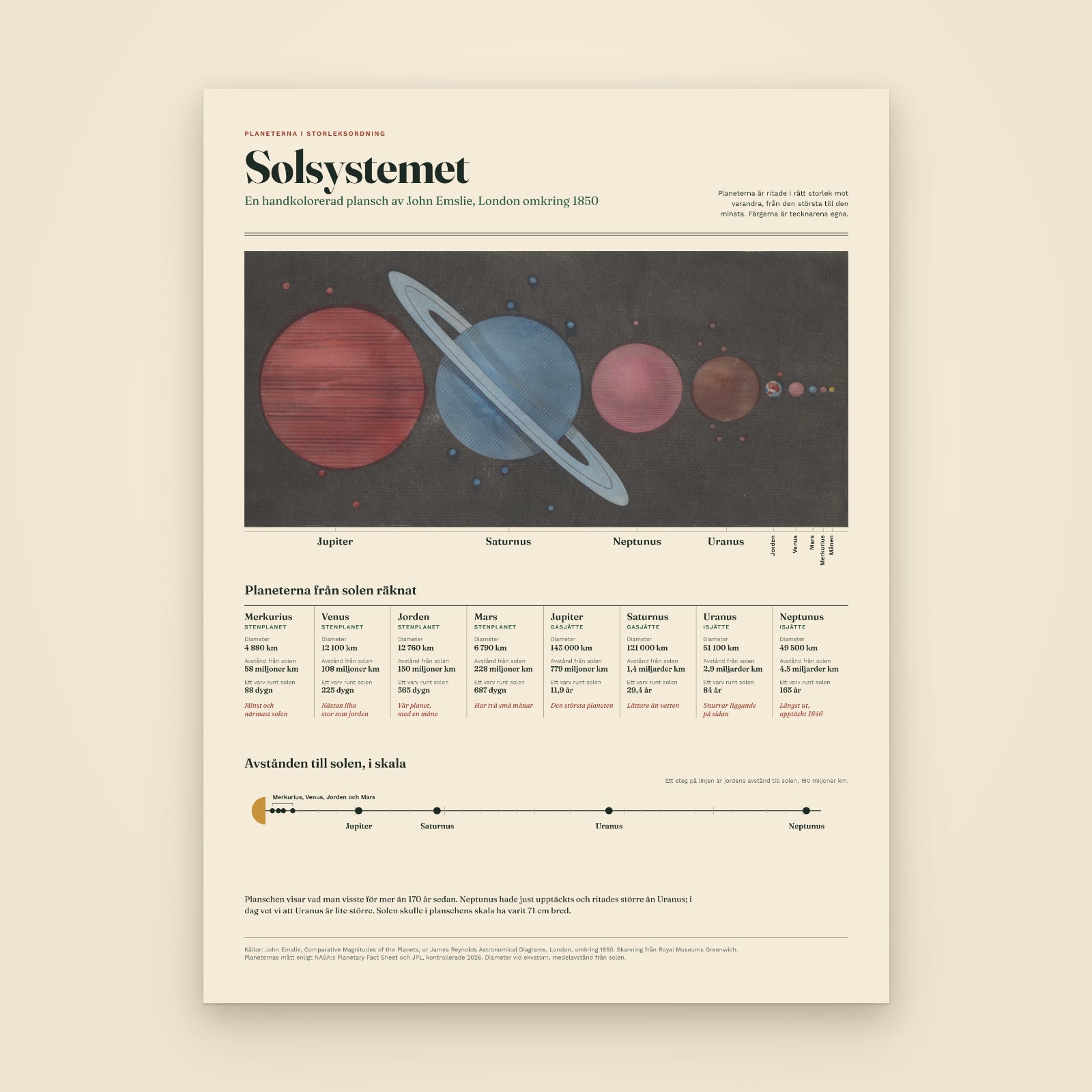
This picture of the Moon was drawn and engraved by John Emslie and published in London around 1850, in the same astronomy series as our poster The solar system. It shows the near side of the Moon with its seas and craters, drawn by hand. We have not redrawn it.
The posters
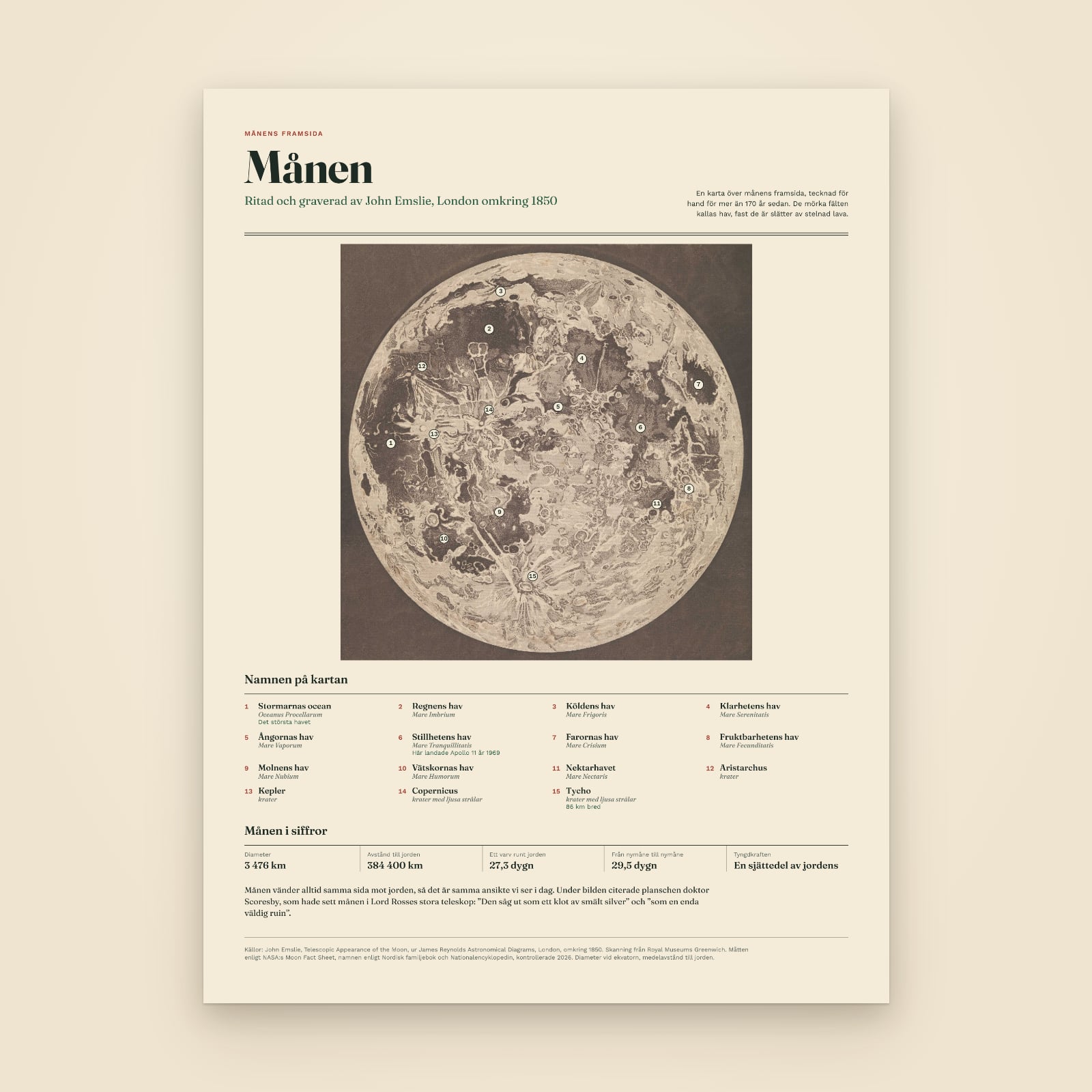
The dark areas are called seas, though they are plains of solidified lava. Eleven of them and four craters are numbered on the picture, and their Swedish and Latin names are printed underneath. Apollo 11 landed in the Sea of Tranquillity in 1969.
Further down are today's facts about the Moon, checked against NASA: how large it is, how far away it is and how long one orbit of the Earth takes. The Moon always turns the same side towards the Earth, so it is the same face you see in the sky today.
The poster suits a child's room, a study or anyone who loves space, perhaps next to The solar system. It comes as a poster in 30 x 40 cm and 50 x 70 cm, and in 30 x 40 cm with a black, white or natural wood frame. It is printed in Europe on 200 g matt, uncoated paper after you order. The text on the poster is in Swedish.
Common questions
Short answers about the poster. If you wonder about anything else, write to us.
Why are the dark areas called seas?
Early astronomers thought they were seas. Today we know they are plains of solidified lava, but the old names have stayed.
Does the Moon look like this today?
Yes. The Moon always turns the same side towards the Earth, so you see the same seas and craters in the sky. The picture was drawn by hand around 1850, so the details are drawn as they were seen then.
How long does delivery take?
Usually 5-8 working days. The poster is printed in Europe after you order and sent straight from the printer to a service point near you. You get an email with a tracking link when the parcel is on its way.